
What Are the Signs of Burnout Nobody Talks About? The Ones That Look Like Success
You’ve done the inner work. You are thoughtful, capable and self-aware. You care about what you build and how you show up.
And yet something just feels a bit off. There’s no huge crisis. Just a feeling of flatness beneath your outwardly ‘successful’ life. If you’ve been wondering what the signs of burnout might be when you’re still showing up, still delivering and still holding it together, then read on.
Perhaps you find yourself taking a pause before you say something. There’s an instinct there but then your mind gets the better of you, and you find yourself holding back. Or you finish a session with a client, a piece of work or a creative project, and somehow you’re not as excited about it as you could be, and you wonder why.
When you were creating your work, was there a part of you quietly making sure it would be acceptable? Keeping it a little safer for the algorithm? Diluting the ideas that may feel a bit ‘out there’, and in the process, not being quite as authentic as you would like?
Outwardly, everything seems fine. Business is ticking along and by all accounts it all looks good. And yet on the inside there is a quiet frustration bubbling within. You know you’re not quite fully showing up as you could be — and it’s not to do with confidence, or mindset. This is something deeper. Something around giving yourself the permission to be fully seen.
Now you can’t just explain this through logic. This is something that is felt within you. Because the body of your work — the living, breathing essence of who you are and what you stand for — is sitting right there in the depths of you, and it’s still waiting to be revealed.
The Quiet Stagnation That Looks Like Success
You’re intelligent and sensitive, and you probably have a real skill for reading the room. You’ve learned to be accommodating, to adjust to fit in — not to offend anyone, or upset the status quo. And yet somewhere along the way, you’ve found yourself smiling, nodding and agreeing, when there has been more sitting there, wanting to be said.
It felt safer to just toe the line. But gradually, these patterns become habitual, and over time, they can become deeply ingrained. To keep a sense of safety in your nervous system, the way that you respond in certain situations starts to come from the most ‘logical’ or strategic position — rather than from what you’re actually feeling. And this can lead to a kind of burnout that is quite subtle because it’s emotional. There is a quiet flatness, a sense of underwhelm. A feeling of going through the motions. A disconnection from what once felt meaningful. There’s a part of your true identity that’s somehow been lost. And perhaps you haven’t even fully admitted it to yourself. But maybe something you’re reading now is resonating.
If you are a coach or a therapist — a burnout therapist, holding space for clients, carrying their emotional weight day after day — then this work can take its toll. You give and you give, you listen, you attune — to the point where it’s hard to switch off and have quality down time. You know you have your own needs to address, but you’re used to prioritising the needs of others. And it’s not that you’re not self-aware — you are. But this quiet deprioritising of yourself means that somewhere along the way, you’ve forgotten who you are beneath the role.
And on top of that, there’s the expectation — from others and from yourself — that you are always calm, always in control and staying regulated. The physical signs of burnout in this context are easy to miss, because it’s not exhaustion exactly, but a kind of chronic low-level drain. You may feel some tension and holding within you, because your body is carrying tension that it doesn’t have the chance to release. And when you are always being the container, when is there a real container for you? Somewhere where you can be fully yourself, open, with honesty — where your vulnerability is welcomed and honoured, for the humanness that it is. This is what compassion fatigue can be — and it is far more common than it is named.
Now if you are a creative, you may find yourself constantly adjusting your work to please the algorithm, to give the market what it apparently wants. And in doing so you may be holding back from what feels too bold or too different. You don’t want to look foolish, but you’re compromising on simply being you. And you may have an inner dissatisfaction that comes with that, because you have a deeper creative calling that you haven’t allowed to emerge yet.
Or there may be something even deeper happening. Because the truth is there is another version of you — beneath the work you’re producing — that you’ve forgotten. A version that is more alive, more instinctive and more expressive. And that version is not being expressed or allowed to be seen.
The Body as the Source of Embodied Identity
Your identity goes way beyond your name or how you present yourself. There’s something about the sense of who you are that comes from deep within. When you are truly grounded and at ease in your body, you show up differently. You express yourself differently. You are able to simply be who you are, without having to compromise on your values, on what you truly believe in, or on what genuinely matters to you.
Naturally there are situations where we follow a certain protocol, where we don’t want to offend. But when you have inner roots of support and feel grounded, your decisions will feel cleaner. You can listen to what your instincts are telling you and you make choices with more authority and clarity. You can express your “no” because you have clear boundaries. You know who you are, and you can stand firm in this, even when things feel unstable or demanding. This is how you can regulate your nervous system from the inside out, by staying connected to yourself. And from this place you cultivate an authentic presence.
By finding your inner resources for support, you can manage those difficult times when you notice your body is starting to contract or your breath is getting shallow. And you have an internal foundation, from which you can begin to move.
Movement is medicine for the body. When we start to move, the tension that we accumulate can begin to disperse. By shaking our body out, taking steps to walk or moving to some music, our internal architecture can begin to reorganise and recalibrate. And movement goes beyond that. Moving can break through the inertia in our minds, our fogginess, to come to new clarity. To shift our perception and awareness.
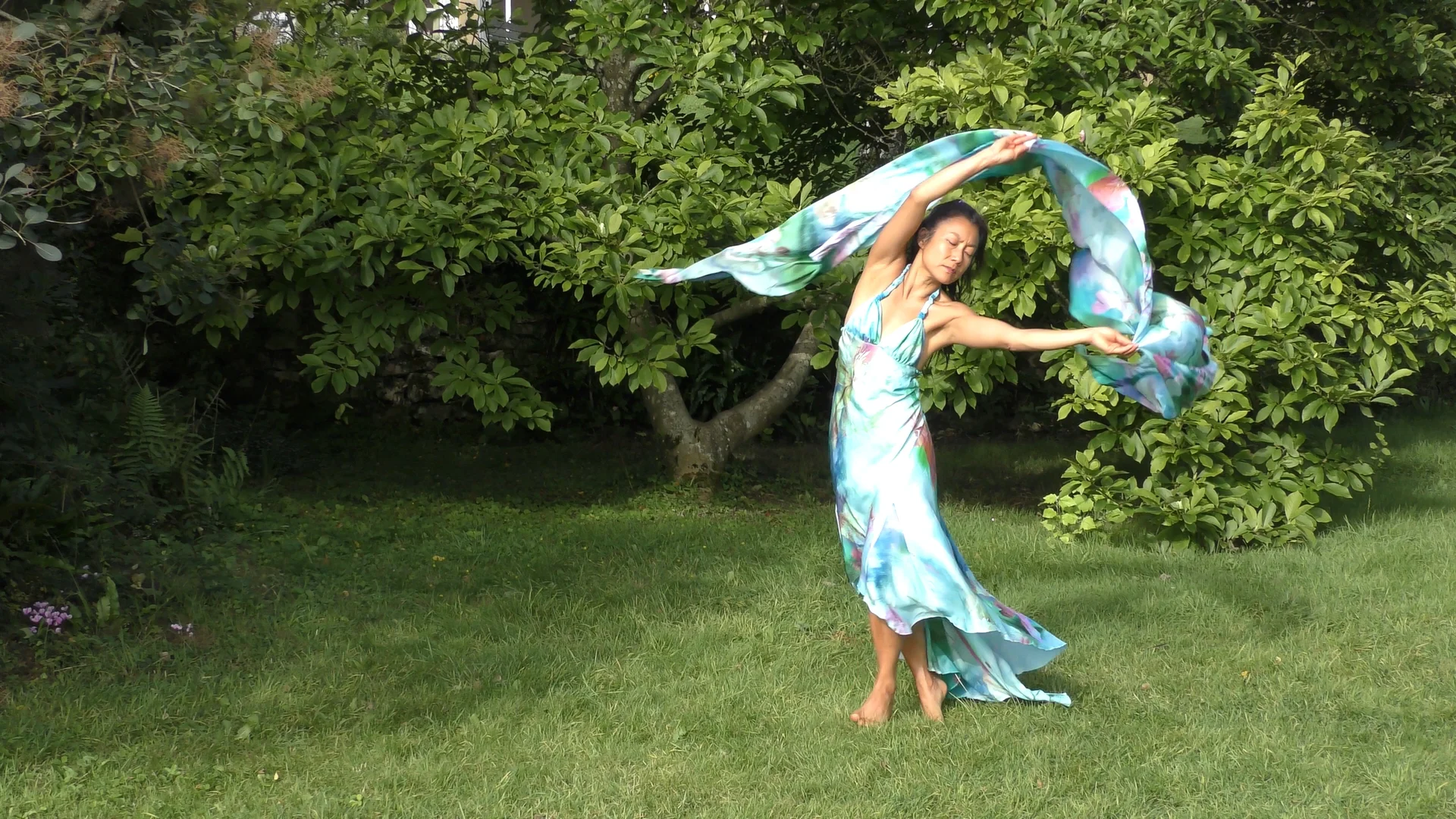
This is what somatic dance offers: it’s not necessarily dramatic or cathartic (although it can be). It’s not trying to ‘fix’ something that is broken, but it’s a practice of returning. A way back to your body, and the body of your work, and to the self who has always been there, who is waiting. A practice to feel like yourself again, not a ‘managed’ or ‘professional’ version, but the full, alive and expressive version of you, that has been there all along.
What This Actually Changes
When this shift happens — when you are no longer leading from performance but from genuine presence — things change in ways that are visible. You know what you want, and you trust it. You make decisions more quickly, because you are no longer second-guessing your instincts. You communicate with more clarity and conviction, because you are not simultaneously editing yourself as you speak.
Your clients experience you differently — as more present, more responsive, more real. Not because you are trying harder, but because less of your energy is going into maintaining a managed version of yourself.
And there is something quieter that also shifts: a return to the wisdom of the heart. Not as sentiment, but as intelligence. The ability to listen inward, to trust what you find there, and to let that be the source from which your work — and your life — flows.
Are you ready to explore what this may feel like in your body? The Visionary Somatic Insight Session is a 90-minute personal guided inquiry designed specifically for coaches, healers, creatives and leaders who may feel flat and are ready to feel alive again, to be in touch with themselves and what they truly need.